
Exploring our Industrial Heritage - The Future of Flight
My Heartfelt Connection to Boeing. I spent 10 years leading Micro-Coax’s production of electronic cables, supporting the defense, aerospace and satellite industries with critical electronic components. Boeing was a long-term and demanding but partnering-type customer of ours. Additionally, our parent company, Carlisle Interconnect was a long-term supplier of Boeing’s too supplying them with electrical cables for their commercial airliner business.
The supply chain requirements for supporting Boeing’s airliner production is extremely complex and thus Lean Manufacturing methodologies internal to Boeing and throughout their supply chain is a must. So much so, that Boeing required CIT to build a plant nearby the Boeing plant in Mukilteo, Washington, such that parts could be delivered daily and just-in-time for production needs. This is a close partnership.
Needless to say, when I toured the Boeing plant and realized the scale of operations, I was in awe! Being a supplier of Boeing’s and then seeing their largest operation, the production of the Boeing 747, my career came full circle. Even as a young man, I was connected to Boeing. When I was an hourly employee for Industrial Plant Services in Philadelphia, I visited the nearby Boeing plant many times to deliver maintenance items and supply industrial services. Even as a young man, I could clearly identify that the complexity of Boeing’s operation was no joke. So you see, I have been connected to Boeing operations for decades. So, touring their commercial airliner plant brought feelings of joy and personal accomplishment. It was a factory tour that I won’t soon forget.
Boeing History
Boeing began in 1916 when William Boeing founded the company in Seattle, Washington, initially building small seaplanes. Over the following decades, Boeing grew from a pioneering aircraft manufacturer into one of the world's largest aerospace companies. During World War II, Boeing played a major role in producing military aircraft, including the famous B-17 Flying Fortress and B-29 Superfortress. After the war, the company expanded into commercial aviation, helping transform air travel with aircraft such as the 707, 727, and 747. The introduction of the 747 in 1970 was particularly significant, making long-distance air travel more accessible and establishing Boeing as a dominant force in commercial aviation. Boeing continued developing advanced aircraft, including the 757, 767, 777, and 787 Dreamliner. The company also expanded into defense, space, satellites, and other aerospace technologies. In 1997, Boeing merged with McDonnell Douglas, significantly increasing its aerospace and defense capabilities. Today, Boeing remains a major American aerospace manufacturer, with a history shaped by innovation, engineering, manufacturing scale, military contracts, commercial aviation, and space exploration.
The Future of Flight – Technology Forward
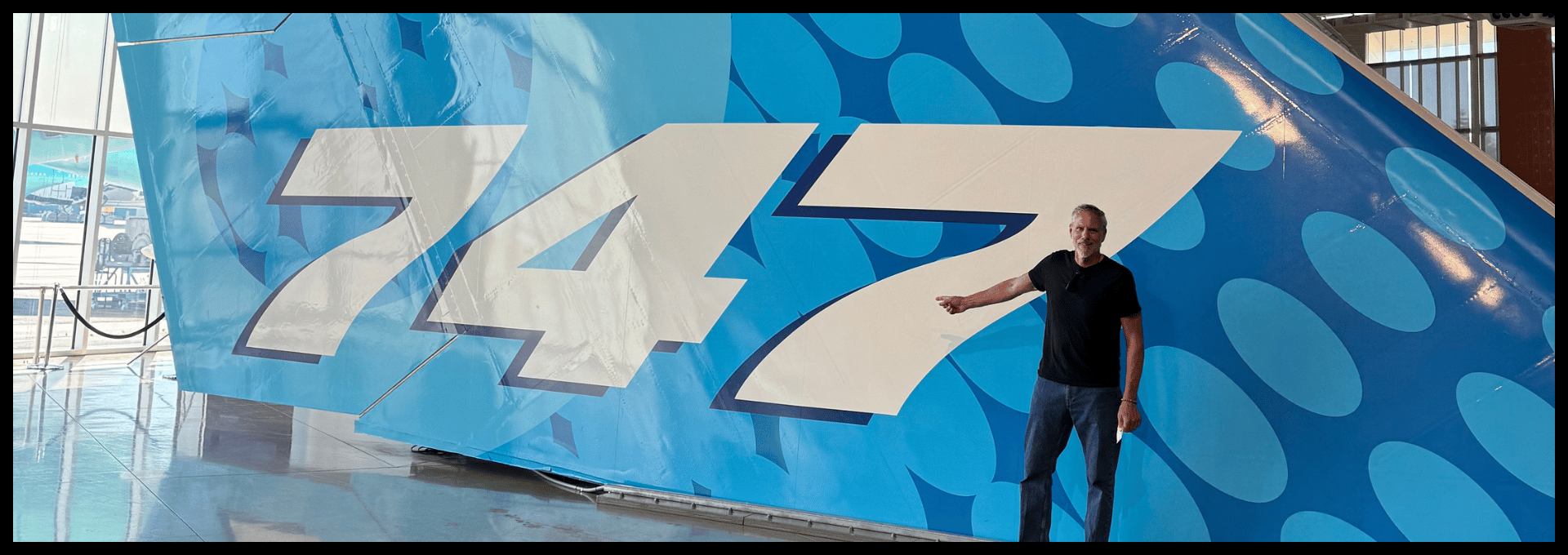
The Future of Flight tour at Boeing offers visitors a fascinating look at how the aviation industry is preparing for the next generation of air travel. As you move through the tour, it becomes clear that the future of flight is about much more than simply building a faster airplane. Boeing and the broader aerospace industry are working toward aircraft that are more efficient, quieter, safer, and increasingly connected through advanced technology. One of the most impressive parts of the experience is seeing how engineers are using lightweight materials, advanced aerodynamics, digital design, and improved manufacturing methods to reduce an airplane’s weight and fuel consumption. Every pound saved can make a difference when an aircraft is flying thousands of miles.
Another exciting aspect of the future of flight is sustainability. Airlines and aircraft manufacturers face increasing pressure to reduce emissions, and future airplanes will need to accomplish more while using less energy. Improvements in engines, aircraft design, sustainable aviation fuels, electric systems, and other emerging technologies could help reduce aviation's environmental impact. Some of these technologies are still developing, but the direction is clear: future aircraft will need to be significantly more efficient than today's airplanes.
What makes the Future of Flight experience particularly interesting is the scale of the challenge. Commercial aircraft must operate safely for decades while carrying hundreds of passengers through all kinds of weather and across enormous distances. That means new technology has to be thoroughly tested and proven before it can become part of everyday aviation. Walking through the Boeing experience gives visitors an appreciation for the engineering, manufacturing, and teamwork required to make that possible. The future of flight is not one single invention; it is the result of thousands of improvements working together. The tour leaves you with the impression that aviation is still evolving, and the airplanes of tomorrow could look, operate, and perform very differently from those flying today.
The Massive Assembly Building
The Boeing plant in Washington State is one of the largest aircraft manufacturing facilities in the world, and its enormous size is one of the most impressive parts of the Future of Flight tour. The main assembly building in Everett covers millions of square feet, creating enough space for several wide-body airplanes to be assembled at the same time. The building is so large that it has been recognized as one of the biggest structures in the world by volume. Inside, visitors can see aircraft sections, wings, tools, equipment, and materials moving through carefully organized production areas. The factory includes massive workstations, storage spaces, offices, inspection areas, and transportation systems designed to keep production flowing smoothly. Its size is necessary because modern airplanes are enormous, with long fuselages, wide wings, complex wiring, engines, and detailed interiors. Workers and machines must have enough room to position, join, inspect, and test each section safely. Even with its incredible scale, the plant operates with careful organization and precision. Lean Manufacturing principles are applied throughout the building, including in the U-shaped production cell of the 747 Airliner.
My Factory Tour
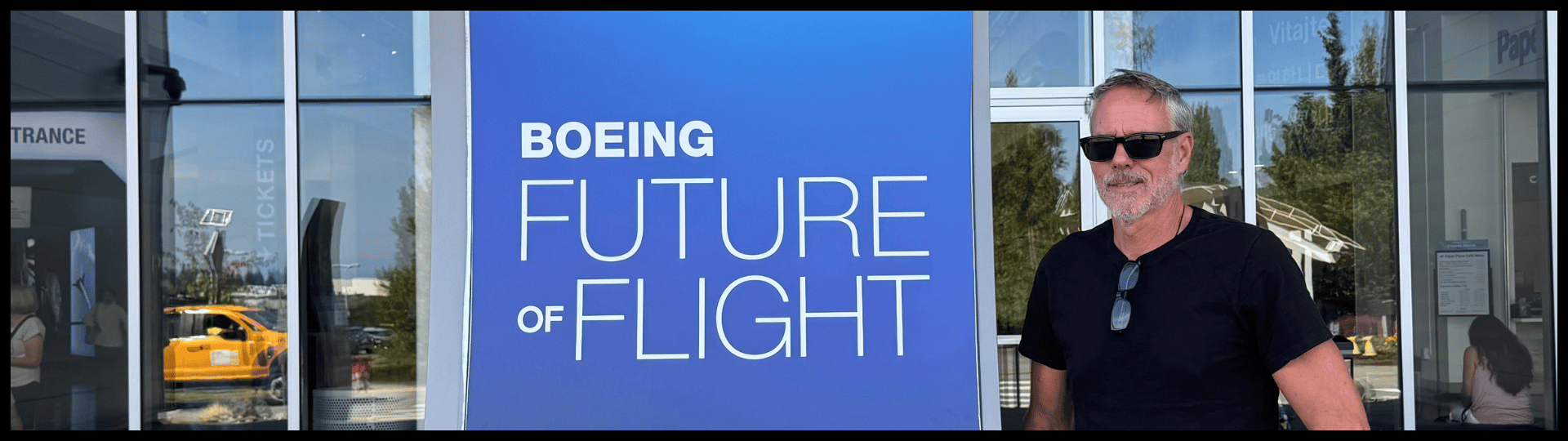
The Future of Flight tour at Boeing provided me with an exciting, close-up look at the factory processes used to build modern commercial airplanes. The most impressive part of the experience is seeing the enormous production facility where aircraft components are assembled into complete airplanes. Inside the factory, workers and advanced machines operate together to drill, fasten, inspect, and join sections of the aircraft with remarkable precision. Large fuselage panels, wings, floors, wiring systems, and interior components move through carefully organized work areas as each airplane gradually takes shape. The scale of the factory is incredible, especially when visitors see how much space is required to assemble an aircraft that will eventually carry hundreds of passengers across the world.
The tour also highlights the important role of automation and robotics in Boeing’s manufacturing process. Specialized equipment helps position parts, create accurate holes, install fasteners, and complete inspections. Digital design systems guide many of these operations, helping employees build aircraft according to exact engineering specifications. Even with advanced technology, skilled workers remain at the center of the factory. They operate machinery, read technical information, inspect workmanship, solve production problems, and make sure every step is completed correctly. Watching employees work alongside robots shows how modern aircraft manufacturing combines human skill with powerful technology.
Quality control is another major focus of the factory tour. Every component must be carefully inspected because even a small mistake could affect an aircraft’s safety, performance, or reliability. Employees use measuring tools, computer systems, and visual inspections to verify that parts are properly installed and meet strict standards. The factory also demonstrates how teamwork and organization keep production moving efficiently. Materials must arrive at the correct workstation, tools must be maintained, and each assembly stage must be completed in the proper order.
Seeing the aircraft being built makes it easier to understand that the future of flight depends not only on new ideas but also on precise manufacturing and careful testing. By the end of the tour, I gained a greater appreciation for the thousands of workers, machines, inspections, and assembly steps required to transform raw materials into a fully functioning and critically safe airliner.
Take a Tour
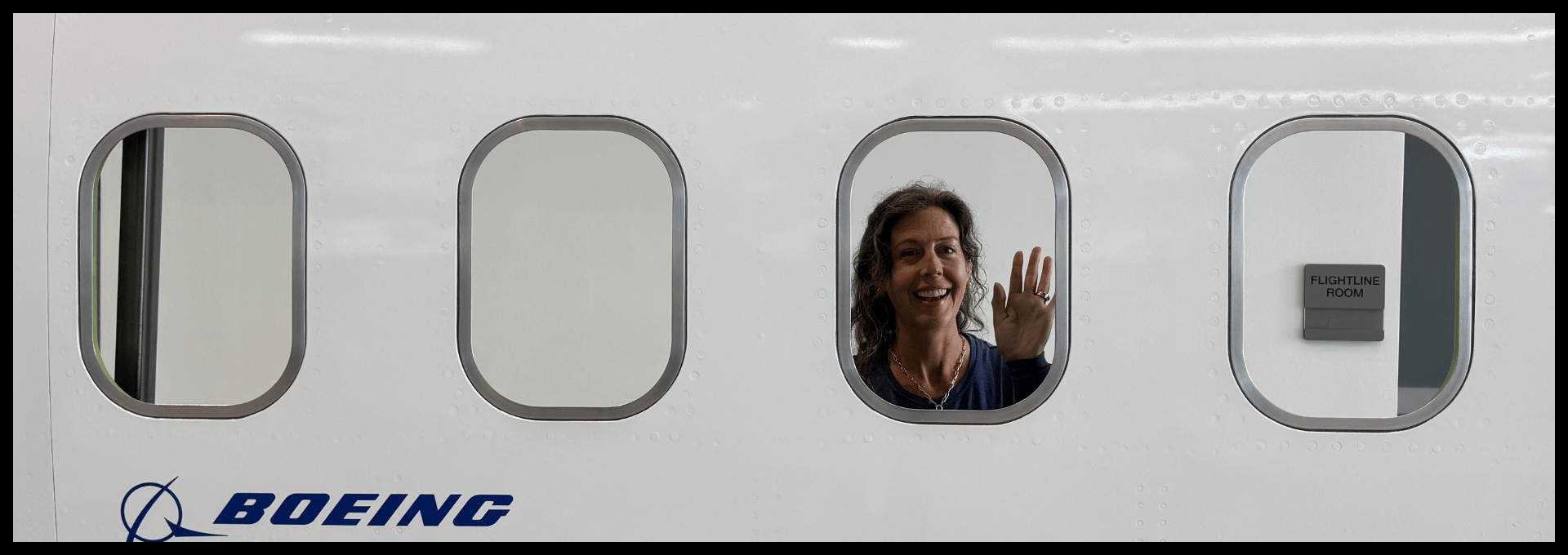
Visit Boeing’s Future of Flight tour in Washington State to experience one of the world’s largest aircraft factories and an incredible museum. Reserve tickets in advance, arrive early, and follow your tour guide through the massive Everett assembly building. From viewing aircraft sections and giant wings to observing organized production areas, the tour reveals how teamwork, technology, and precision create modern airplanes. It is worth visiting because the enormous facility makes aerospace manufacturing feel exciting, real, and unforgettable. Then, after the tour, visit the on-site museum to explore the future of aerospace technology.
Stay connected with news and updates!
If you want some weekly T4T wisdom coming straight to your inbox for your reading pleasure - look no further! Join our mailing list to receive the latest blogs and updates.
Don't worry, your information will not be shared.
We hate SPAM. We will never sell your information, for any reason.
